 English
 Italian

THE AVENTURINE
April 23, 2020
0 Comment
The aventurine is a particular technique of glass working invented by the Murano masters around 1620. The result of this technique is a very special translucent crystalline paste, in which are immersed straws or copper crystals with bright metal oxides, which make it similar to aventurine quartz. The name seems to derive from the term "ventura", because it seems to have been discovered by chance by a master glassmaker who one day, while he was busy melting together the various components of the glass, for some mishap abandoned the fusion causing it to fail. After a week of waiting to obtain the complete cooling of the furnace and the cauldrons, the master, breaking them, found this wonderful material. According to another version it always derives from the term 'ventura', but to indicate the difficulty and the fallibility of the procedure to obtain it.
The aventurine is obtained by adding lead and/or tin calcine, copper oxide, iron oxide and reducing substances to the molten glass, in small doses and in different steps, in order to precipitate the copper in the glass in crystalline form. Then the furnace is turned off to obtain cooling and after a few days the complete separation of copper, which is dispersed in minute crystals, from the base glass is obtained: it is these crystals that give the material a red-brown glow with golden reflections. This compound is extracted in blocks from the furnace, cut and cold polished as if it were a hard stone or hot worked.
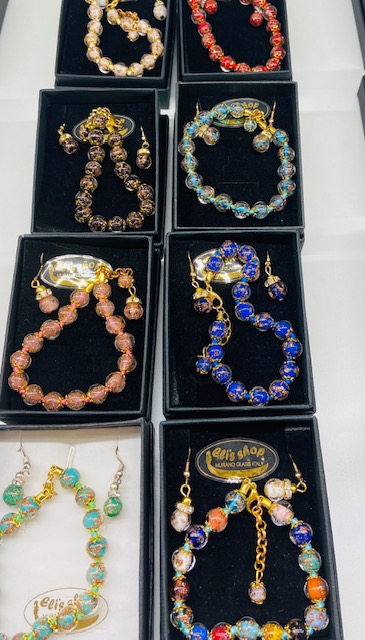
The aventurine is a technique widely used by the Murano masters both in the production of beautiful pendants and in the creation of beautiful plates, vases and sculptures.
In our site you can find many items, from costume jewelry to plates of various types and sizes, decorated with this ancient technique, which can be beautiful gifts for yourself or for your home, or for friends!
