 English
 Italian

Murano Glass Work and History
April 03, 2020
0 Comment
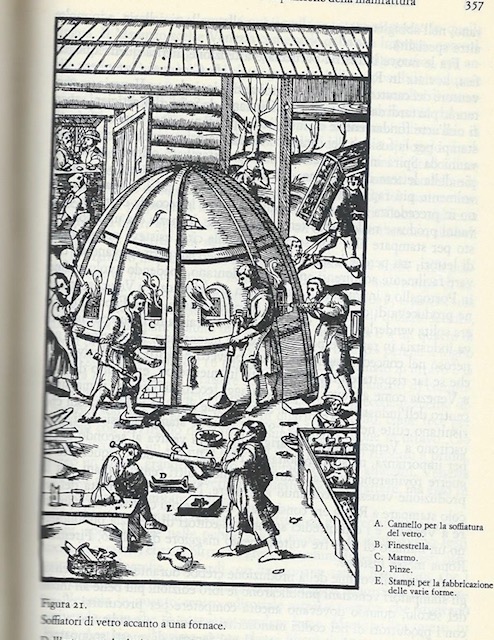
The oldest document available concerning this art dates back to 982, and according to this date in 1982 the thousand years of Venetian glassmaking activity were celebrated. At the end of the thirteenth century the furnaces were relocated for safety reasons to the island of Murano, and are concentrated along the Rio dei Vetrai, where the oldest workshops can still be found today. The working of glass, which has its roots in the ancient civilizations of the Middle East, the Phoenicians, the Egyptians and the Romans, evolved considerably between 1400 and 1800: around 1450, thanks to his intuition and ingenuity, master Angelo Barovier, glassmaker of an ancient Murano family, managed to obtain a transparent white glass that imitates crystal. This glass guaranteed artistic predominance in Venice for more than 200 years and made it possible to create more precious objects. In the sixteenth century Murano glass reached its peak: refined techniques and developed the materials, the masters dedicated themselves to the study and improvement of the artifacts. The blown glass became thin and very pure, the shapes became lighter and lighter, and these objects were used to decorate the houses of the highest social classes in Europe. It was also in this period that a real form of industrial espionage developed among the furnaces, to seize and steal the secrets of the best glassmakers in Murano. The Republic, which protects the category of glassmakers and strictly forbids such activity to be carried out outside of it, grants them privileges such as carrying a sword, marrying their daughters to members of the wealthiest Venetian families, and immunity from legal proceedings; it also establishes awards for masters who discover new techniques in glass working, and tries to prevent them from emigrating abroad to export this very important activity. The art of glass began to suffer a period of decadence in the 17th century, when some masters decided to emigrate by setting up furnaces in other countries and a new type of lead crystal glass and potassium crystal glass was discovered in Bohemia and England respectively. In the second half of the 19th century the glass industry was revived, glassworks were founded which are still famous today and techniques were developed which are the basis of modern glassmaking. In the 20th century the Murano masters followed the developments of the contemporary artistic movements, dedicating themselves both to refined craftsmanship and to the experimentation of art in respect of the millenary tradition that makes Murano glass a unique, prestigious and inimitable product.
The glass is composed of silica, which becomes liquid at high temperatures, and metal carbonates (sodium, potassium, calcium lead). Before it hardens and goes into the solid state, there is an interval in which the glass becomes soft and malleable, making it possible for the master to work it. In addition to silica, sodium oxide is added, so the glass solidifies more slowly and the master has more time to shape the material.
The other raw materials that the craftsman can add are sodium, to make the surface of the glass opaque, nitrate and arsenic, to eliminate bubbles, and dyes. To obtain coloured glass, small quantities of metal oxides are added: iron for green, cobalt for blue, colloidal gold or copper for red, and tin for milk glass. The mixing of the raw materials takes place in the evening, at the end of working hours, and the preparation of the material takes place all night; the furnace melts the raw materials at a temperature of about 1400 degrees and the master glassmakers in the morning find the melted material, ready to be shaped. The glass paste remains ductile up to 500 degrees. The working group, called "piazza", is composed of servants and apprentices coordinated by the master. The work can then be cold finished by expert grinders who carry out sanding or other finishing touches. The processing of Murano glass can be divided into 2 categories: first processing, which includes the processes that use the raw material (sand, soda and other compounds), or raw glass, melted in specialized furnaces to obtain the glass mixture that is then processed; second processing, which includes lampworking with the use of glass canes, glass casting and "cold" processing such as decoration, engraving and grinding.
